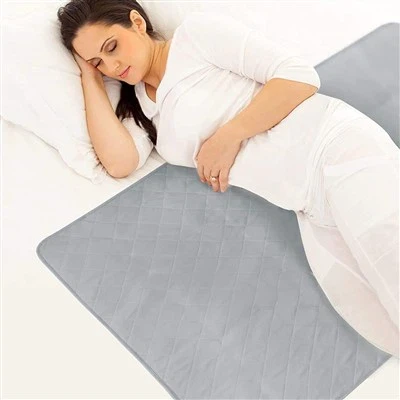
Whether you are caring for an aging parent, managing a long-term medical condition, or running a professional care facility, washable incontinence pads-also known as reusable underpads-are absolute lifesavers.
They are cozy, they save you a fortune compared to throwaway options, and they keep mountains of plastic out of landfills. But here is a question that trips a lot of people up: How long do these pads actually last, and when is it time to toss them out?
It is easy to assume a pad is fine as long as it isn't torn, but using a pad past its prime can lead to unexpected leaks, stubborn odors, and uncomfortable skin rashes. Here is a practical, plain-English breakdown of how long washable pads last, how to spot when they are wearing out, and how to get the absolute most out of your investment.
The Realistic Lifespan of a Washable Pad
Not all pads are made equal. How long yours will last comes down to how well it was built and how often it gets washed:
Standard home-use pads: Usually handle 150 to 250 washes.
Hospital-grade pads: Built tough to endure 250 to 400 washes.
Budget/low-cost pads: Trough out much faster, often losing performance after just 50 to 100 washes.
If you translate that into everyday timeframes based on normal rotation:
Used daily at home: Plan to replace them every 6 to 12 months.
Used 2–3 times a week: They will generally last 12 to 18 months.
Used occasionally: You can get 18 to 24 months out of them.
Used in nursing homes or hospitals: Because of heavy commercial washing, expect to swap them every 4 to 8 months.
Tip: Hot water and high dryer heat can cut these lifespans by nearly 40%. Gentle care goes a long way!
Why Do Reusable Pads Wear Out?
To understand why pads fail, it helps to look at what's inside them. A quality pad relies on three layers working together: a soft top layer to wick moisture away from the skin, a dense middle core to trap liquid, and a waterproof bottom barrier to protect the mattress.
Over time, heavy laundering takes a toll on each layer:
The core loses its soak-up power: Hundreds of wash cycles compress the inner fibers, meaning the pad holds 20% to 30% less liquid than it used to.
The waterproof layer cracks: The plastic or film backing (like TPU or PUL) can peel, bubble, or crack from high heat and harsh detergents. Once that happens, liquid passes right through.
Bacteria build up: Over time, deep-set bacteria can form a stubborn layer inside polyester fibers that regular washing can't strip out.
The pad loses its shape: Warped, curled, or shrunken edges leave parts of the bed exposed, leading to messy midnight accidents.
6 Warning Signs It's Time to Replace Your Pad
Don't wait for a major mattress disaster to buy new pads. It is time to replace your underpad if you notice any of these red flags:
It leaks, even when it isn't full: This means the waterproof backing has cracked.
The top stays wet: The inner core isn't pulling liquid away fast enough, leaving damp fabric against the skin.
It smells even after a hot wash: Trapped bacteria are staying behind, which can trigger skin infections.
The fabric is fraying, thinning, or pilling: A sign the fibers are broken down and losing structure.
The edges curl up: Curled borders mean the pad won't lie flat, opening up room for leaks underneath.
Unexplained skin redness or rashes: A degraded top layer can cause friction, and trapped bacteria can irritate sensitive skin.
Rule of thumb: If you notice two or more of these signs, it's time to swap it out for a fresh one.
Easy Laundry Tips to Make Your Pads Last Longer
You don't need a complicated routine to keep your pads in great shape, but a few simple habits will easily add months to their lifespan:
Rinse first: Give soiled pads a quick rinse in cold water before putting them in the washing machine.
Keep the water warm, not boiling: Wash at around 40°C (104°F) using a mild, neutral detergent.
Skip the harsh stuff: Avoid bleach, vinegar, and heavy enzyme stain removers-they eat away at the waterproof lining.
Air dry or tumble dry low: High heat is the #1 killer of waterproof backings. Line drying in the shade is best.
Rotate your stock: Keep 3 to 5 pads in rotation so you aren't wearing out the same one day after day.
Do Washable Pads Really Save You Money?
Yes-massively so.
A high-quality washable pad might cost around $25 up front, but at 250 uses, that comes out to just $0.10 per use.
On the flip side, disposable pads cost around $0.75 each. Over a full year of daily use, disposables will cost you roughly $270, while a small set of washable pads will run you about $36.
That is more than an 85% savings every single year, not to mention keeping over 20 pounds of trash out of the landfill per pad!
Looking for Reliable, Clinical-Grade Pads?
If you are looking for long-lasting, ultra-absorbent, and skin-friendly underpads, we have got you covered.
At xxingpad, we manufacture high-performance, OEKO-TEX certified washable pads designed to withstand hundreds of wash cycles without losing their protective edge.
👉 Explore our collection at xxingpad.com 📧 Have questions or need bulk/OEM ordering? Reach out to us at xxingpad.com-we are happy to help!