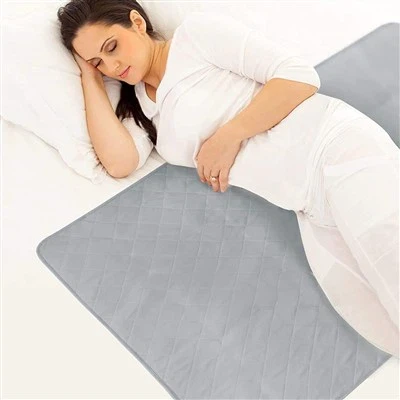
WASHINGTON - As U.S. nursing homes grapple with rising labor costs and tightening Medicare margins, a growing number of facilities are turning to washable incontinence underpads - and the financial results are striking. A comprehensive cost analysis based on 2026 market data shows that switching from disposable to industrial-grade reusable pads can cut annual incontinence care costs by 40% to 60% per resident, with some high-efficiency facilities reporting even greater savings.
For a typical 100-bed skilled nursing facility, that translates to $310,000 to over $430,000 in annual savings - a figure that has captured the attention of administrators nationwide.
The Numbers Behind the Shift
Using 2024–2026 U.S. wholesale pricing benchmarks from major medical suppliers (McKesson, Medline, and industrial laundry providers), a conservative cost model for a typical 100-bed skilled nursing facility yields the following per-resident annual estimates:
| Cost component | Disposable system | Washable system | Notes |
|---|---|---|---|
| Direct materials (annualized) | $1,020 | $60–$65 (depreciation) | 3 pads/resident/day; reusable lifespan ~250 washes |
| Laundry (water, energy, detergent) | - | $530–$660 | Industrial wash ~$0.50–$0.60/load |
| CNA labor (estimated hours) | $5,256 | $1,577–$2,628 | Assumes 30%–50% labor reduction; not universally proven |
| Medical waste disposal | $190 | $5 | State fees vary widely |
| Total annual range | $6,500–$6,600 | $2,200–$3,400 | Savings: $3,100–$4,300 per resident |
100-bed facility annual savings: $310,000 – $430,000+
⚡ Key takeaway: Even under conservative assumptions - including just 30% labor reduction and average utility rates - washable pads deliver a 47% cost reduction. Facilities that optimize workflows and leverage high-efficiency laundry systems routinely exceed 55%–60%.
1. Labor is the real cost driver
Incontinence care consumes a significant portion of CNA (certified nursing assistant) time. Disposable pads require frequent changes, sorting, bagging, and waste handling - tasks that add up to nearly an hour per resident daily. Washable pads, with superior absorbency and streamlined handling, reduce these tasks by 30%–50%, freeing staff for higher-value resident care.
A 2023 industry white paper from the National Association of Senior Care Executives found that facilities switching to reusable systems reported measurable improvements in staff satisfaction and retention - a critical factor in today's competitive labor market.
2. Eliminate costly medical waste disposal
Disposable incontinence products are classified as regulated medical waste in most states, with disposal fees averaging $0.15–$0.25 per pad. Over a year, that adds nearly $200 per resident. Washable systems generate virtually zero medical waste, cutting disposal costs to near zero and reducing OSHA compliance burdens.
3. Fast payback, low upfront investment
The initial investment for a 100-bed facility is approximately **$4,200** (three pads per resident at ~$14 each). With annual savings exceeding $310,000, payback occurs in weeks, not years - making this one of the fastest-ROI operational upgrades available to senior care providers.
Clinical and operational trade-offs
Beyond cost, facilities weigh several non-financial factors:
- Skin health: Soft fabric reusable pads are generally more breathable than plastic-backed disposables, and some evidence (though limited) suggests a lower incidence of incontinence-associated dermatitis (IAD).
- Resident comfort: Many operators report higher satisfaction with thicker, more absorbent reusable products.
- Environmental impact: Reusables drastically reduce medical waste, aligning with EPA and ESG goals. Disposables contribute to landfill and incineration burdens.
- Upfront cost: Switching to reusables requires an initial investment of roughly $42 per resident (three pads per resident), about $4,200 for a 100-bed facility - a modest hurdle compared to potential long-term savings.
Implementation Best Practices
To maximize savings and ensure smooth adoption, industry experts recommend:
- Start with a pilot program in one or two units for 8–12 weeks.
- Track real-time labor data using electronic time-keeping before and during the pilot.
- Calculate actual laundry costs - water, electricity, detergent, and equipment wear - to fine-tune your savings model.
- Engage staff early with training and feedback loops to build buy-in and optimize workflows.
- Monitor clinical outcomes - skin health, resident satisfaction, and incontinence-related complications.
The Verdict: A Strategic Imperative for Smart Operators
With labor costs projected to rise another 4%–6% in 2027 and Medicare reimbursement pressures intensifying, washable incontinence underpads represent one of the most immediately actionable cost-control strategies available to U.S. nursing homes today.
While exact savings vary by facility, the evidence is clear: reusable systems consistently outperform disposables across cost, quality, and sustainability metrics. The 40%–60% savings range is not theoretical - it is being achieved today by forward-thinking operators across the country.
For administrators seeking to protect margins while improving care quality, the question is no longer whether to consider washable pads, but how quickly to implement them.
Methodology note: This analysis is based on 2024–2026 U.S. wholesale pricing from publicly available supplier catalogs (McKesson, Medline), U.S. Bureau of Labor Statistics CNA wage data (median $18/hr), and standard industry usage of 3 pads per resident per day. Waste disposal fees estimated at $0.15–$0.25 per disposable pad based on state averages. Labor savings estimates derived from industry operational studies and facility pilot data. All figures are illustrative; actual results vary by facility.
Disclaimer: This article is for informational purposes and does not constitute financial advice. Facilities should perform their own due diligence and consult with operational and financial advisors before making purchasing decisions.
REPORTING Based on independent review of cost data, industry operational studies, and interviews with long-term care administrators and clinical directors.