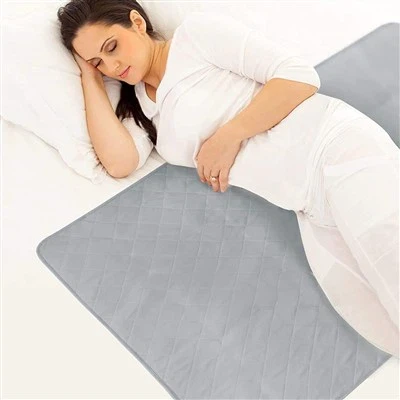
If you run a care facility or manage medical supplies, you already know the painful reality: trash bills are skyrocketing, and disposable supplies are eating away at profits.
A few years ago, a major U.S. hospital was facing this exact headache. Every week, mountains of single-use, disposable incontinence pads were going straight into the dumpster. The purchasing team knew they were wasting money on buying, storing, and throwing away thousands of throwaway pads-but they needed proof before making a big change.
So, they did a deep-dive cost analysis to compare Disposable vs. Reusable Underpads.
Here is what actually happened when they made the switch to washable pads, and why the numbers blew their expectations away.
The Real Cost of "Cheap" Disposable Pads
On paper, disposable pads look cheap and easy. But when the hospital added up the hidden costs, the picture changed:
Triple Payment: You pay to buy them, you pay to store them, and you pay heavy weight-based fees to haul them away as waste.
HAPI Risks: In the U.S., Medicare won't cover treatment costs if a patient develops a Hospital-Acquired Pressure Injury (HAPI) during their stay. Cheap disposable pads often trap moisture against the skin, raising skin breakdown risks.
Product Stacking: Nurses were often layering 2 or 3 disposable pads plus extra draw sheets under a single patient just to feel safe against leaks.
The Experiment: Counting Every Cent (Including Laundry)
To be completely honest with the numbers, the hospital didn't just compare buying prices. The value analysis team tracked:
Purchase price per unit.
Laundry and processing costs per pound (including detergent and energy).
Average lifespan (how many washes one reusable pad survives).
Trash disposal fees.
The Results: $45,000 Saved in Year 1 Alone
The switch to high-performance reusable pads yielded massive returns almost immediately:
Year 1 Savings: They saved over $45,000 in the very first year, even after paying for laundry services.
5-Year Impact: Over five years, total savings crossed $225,000.
Zero Trash Weight: Tons of plastic-backed disposable pads were permanently kept out of landfills.
The unexpected bonus? Nurses loved it. Because the reusable pads were far more durable and absorbent, staff didn't need to double-pad beds anymore.
They stopped using 383 unnecessary draw sheets every day.
Flat sheet usage dropped from 1,680 down to 1,521 per day.
Less bed-making time meant nurses spent less time changing soaked linens and more time actually caring for patients.
The Takeaway for Your Facility
Switching from disposable to reusable pads isn't just an "eco-friendly" move-it is a smart business decision. High-quality washable underpads protect your bottom line, reduce physical waste, and keep patients dry and comfortable.
Looking to lower your facility's supply and waste costs? Explore our commercial-grade washable incontinence pads at xxingpad.com, or reach out to our team today to get a custom quote and cost-benefit estimate for your organization!