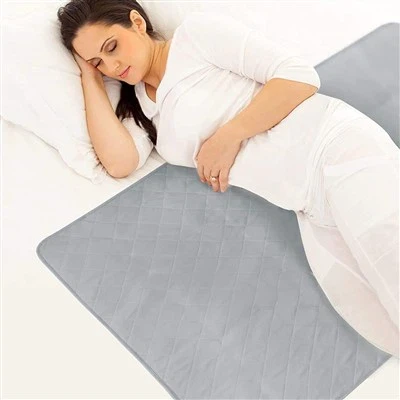
Washable & Reusable Bed Pads
These bed pads are generally constructed by quilting a fabric top layer to an inner soaker material, which is then sewn onto a waterproof vinyl backing.
The most common materials used for the top layer include:
Birdseye (100% Cotton): Usually the most economical choice. However, because it is made of 100% cotton, it generally has a shorter lifespan.
Ibex or Durablend (80% Cotton / 20% Polyester): Thanks to the blended fibers, this type holds up better through repeated wash cycles.
Tricot (100% Brushed Polyester): Made from synthetic fibers, Tricot is popular for its exceptionally soft texture, making it comfortable against bare skin.
What is a Soaker?
Bed pads are designed to absorb urine efficiently. When shopping, you will notice that bed pads come with different absorbent capacities. The most common soaker weights are 6 oz, 8 oz, or 10 oz per square yard of poly/rayon fabric.
The soaker layer sits directly beneath the top fabric to pull moisture away from the skin. It's important to note that the ounce rating refers to the weight of the material per square yard, not the total volume of liquid the pad can absorb. Furthermore, underpads with a higher percentage of rayon in the blend will absorb more liquid.
How Much Liquid Does an Underpad Absorb?
Lighter soaker weight: Absorbs less liquid.
Heavier soaker weight: Absorbs more liquid.
Higher rayon percentage: Increases overall absorbency.
How to Choose the Right Bed Pad for Your Needs
When choosing a bed pad, keep the following factors in mind:
Laundering Costs: Heavier soakers hold more liquid but take longer to dry, which can increase washing and drying costs.
Incontinence Level: For heavy incontinence, opt for a heavier soaker weight.
Change Frequency: Consider how often the pad will be replaced (e.g., once a night versus multiple times throughout the night).